Called to Care: Faith, Community, and the Social Infrastructure of Recovery
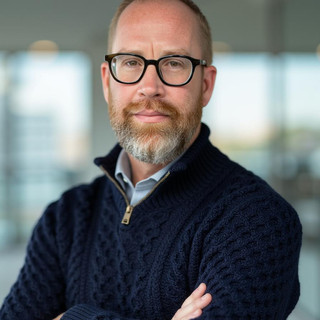

During the week of July 7, 2026, I had the opportunity to participate in a convening at the U.S. Department of Health and Human Services in Washington, D.C. The gathering, titled “Called to Care: Strengthening Faith and Behavioral Health as Social Infrastructure for Recovery,” brought together behavioral health professionals, faith leaders, advocates, organizational executives, policy experts, people with lived experience, and representatives from at least two Tribal Nations. In total, participants came from 31 states.
From the beginning, the convening felt different from many of the policy and behavioral health meetings I have attended over the course of my career. The conversations were certainly informed by research, clinical experience, policy, and program design. At the center of the gathering, though, was something more personal and more elemental. We were being asked to consider what allows people, families, and communities to continue moving forward during periods of profound difficulty, and what role faith, spirituality, belonging, and human connection can play in that process.
Monty Burks, Director of the HHS Center for Faith, later described the gathering as an opportunity to elevate lived experience, discuss the real needs present within communities, and identify practical ways to support families and strengthen partnerships. That description captures much of what I experienced in the room. The convening was not simply about how government could engage faith communities, or how faith communities could become more involved in behavioral health. It was a deeper conversation about the relationships, institutions, traditions, and networks that form the social infrastructure surrounding people when they are struggling.
I left Washington with a number of practical insights about recovery, behavioral health, community, and public policy. I also left reflecting more deeply on my own complicated relationship with faith.
A Complicated Relationship With Faith
In full transparency, my relationship with faith has never been simple.
I was baptized into the Christian faith as an infant and confirmed in the Episcopal Church as a teenager. I remember moving through the confirmation process as though it were another form of goal attainment. There were prayers to memorize, traditions to understand, and expectations to fulfill. I learned the Nicene Creed and the Lord’s Prayer, and I participated in the rituals that marked my formal entry into the church.
At the time, I often felt as though I was going through the motions. Looking back, though, I recognize that something deeper was taking place beneath the surface. A seed was being planted that had very little to do with memorization or recitation. It was the beginning of a spiritual awakening that I did not yet have the language or life experience to understand.
When I was 17, I watched the historic church where I had grown up burn to the ground in an accidental fire. The building was more than 100 years old. I stood there and wept as the flames tore through the wooden structure and shattered the stained glass windows that had framed so many moments of comfort, reflection, joy, grief, and heartache. I had countless conversations with my higher power within those church walls, baring my soul during particularly dark times in my life when I wasn't sure I wanted to continue living.
Watching that church disappear profoundly shook the way I had come to understand religion and spirituality. In some ways, it brought me back to a more fundamental belief that a church is not defined by its walls, its windows, or its physical structure. A church is ultimately defined by the people within it, particularly those who are committed to loving, serving, and walking alongside their fellow travelers on this earth.
As I grew older, though, I also became more aware of the disconnect that can exist between the foundational elements of Christianity and the ways faith has sometimes been interpreted, practiced, or used as a source of power. I had come to embrace love, compassion, grace, acceptance, and service as a personal codex for living. It became increasingly difficult for me to reconcile those values with expressions of religion that seemed rooted in judgment, exclusion, fear, or control.
I no longer wanted to simply recite the Lord’s Prayer or mumble the Nicene Creed during another church service. I wanted something deeper. More than that, I expected something deeper.
Finding a Higher Power Through Recovery
When I entered recovery at the age of 18, I was reintroduced to the concept of a higher power through my participation in Alcoholics Anonymous and Narcotics Anonymous.
The understanding of a higher power that I encountered through 12 step recovery felt different from what I had experienced during my religious upbringing. It was less prescriptive and more personal. I was not being asked to accept one particular theological definition. I was being invited to consider the possibility that I did not have to carry everything alone.
Through that process, I began to experience faith and spirituality in ways that extended beyond the walls of a church. I found spiritual connection in recovery meetings, in honest conversations, in the natural world, and in the relationships that develop when people become willing to share their struggles without pretense.
I witnessed the healing power of being truly known by other people. I saw what could happen when someone who had traveled a similar path was willing to sit beside another person during a moment of fear, shame, uncertainty, or despair. I began to understand that faith could be expressed through presence, compassion, humility, and the willingness to remain connected when another person was struggling to believe that recovery was possible.
I also learned that community does more than support us in our own times of need. It gives us the opportunity to give something back. Offering compassion, empathy, encouragement, and service to others nurtures our own spirit in return. The relationship changes both people.
Over time, I came to understand recovery as deeply personal, although never entirely individual. Recovery may begin within a person, but it is strengthened and sustained through relationships, community, purpose, and connection.
Stepping Into the Unknown
During the past year, I have found myself experiencing another significant shift in my faith.
This most recent part of the journey began with a willingness to loosen my grip on the need to control every outcome. I have been trying to trust that the universe will bring me toward the places where I need to be, and that my higher power will provide enough light for me to recognize the next step. Sometimes that light has been clear and unmistakable.
At other times, it has required me to move into the darkness before I could see what was in front of me.
I often think about the scene in Indiana Jones and the Last Crusade when Indiana stands at the edge of what appears to be a bottomless chasm. He cannot see the bridge that will carry him across. He must take the step before the path becomes visible.
That scene resonates with me because stepping into uncertainty is not comfortable. I have spent much of my professional life focused on strategy, evidence, analytics, planning, and execution. I naturally want to understand the path, the risks, and the destination before I begin moving.
During the past year, I have made it a personal mission to push against that instinct. I have tried to accept work that is unfamiliar, enter spaces that challenge my assumptions, and remain open to experiences that shake my core enough to require some form of reset.
The convening at HHS was one of those experiences.
When I first learned that the Department of Health and Human Services had a Center for Faith, my immediate reaction returned me to junior high civics class. What about the separation of church and state? How does a Center for Faith exist within the federal government? How can government engage religious institutions without favoring one tradition, excluding others, or blurring important constitutional boundaries?
Those questions remained with me as I entered the convening. They have not entirely disappeared.
I did learn that the federal government has formally engaged faith based and community organizations across multiple presidential administrations. The structure, name, and emphasis of that engagement have evolved over time. The current HHS Center for Faith serves as a liaison between the Department and faith based entities, community organizations, and houses of worship, with a stated focus on strengthening families and improving health and well-being.
Understanding that history provided helpful context, although the most meaningful part of the experience came from seeing how the conversation unfolded in practice.
Faith as a Source of Hope, Belonging, and Purpose
The convening challenged me to consider faith in a broader way.
Rather than viewing faith solely as a specific religious doctrine or practice, I began to think about it as an accelerant of community engagement and a source of hope, purpose, connection, and belonging during times of darkness.
This distinction matters because religious affiliation in the United States is changing, while the search for meaning and spiritual connection remains deeply present. Recent Pew Research Center findings indicate that 62 percent of American adults identify as Christian, 7 percent identify with another religious tradition, and 29 percent are religiously unaffiliated. At the same time, large majorities of Americans continue to express belief in God, a universal spirit, the existence of a soul, or some spiritual dimension beyond the material world.
Formal religious participation, personal spirituality, cultural tradition, and belief are not interchangeable. The data suggest, though, that questions of meaning, purpose, connection, and transcendence remain relevant to many Americans, including people who no longer identify with a specific religious institution.
Faith communities also remain embedded within the nation’s behavioral health and recovery response. Congregations host recovery meetings, operate food programs, support families, assist people returning from incarceration, provide transportation, offer mentoring, connect people with housing and employment resources, and create spaces where people can gather without entering a formal clinical environment.
A national analysis published in the Journal of Religion and Health found that spirituality oriented and 12 step approaches were present within a substantial portion of substance use treatment and recovery services. The study also identified a significant network of congregation based recovery supports operating throughout the country. While the underlying data reflect an earlier period and should not be interpreted as a current national census, the findings illustrate how deeply faith and spirituality have already been woven into the recovery ecosystem.
The question is not whether faith communities have a role. They already do.
The more important questions involve how behavioral health systems, public agencies, and faith communities can work together in ways that are ethical, inclusive, respectful, and responsive to the needs of the people they hope to serve.
Science Can Bear Witness to What Communities Already Know
One of the statements I heard during the convening was that science can provide witness to what we already know.
I have continued to reflect on that idea.
Science can help us better understand the relationship between spirituality, social connection, purpose, hope, health, and recovery. Research can reveal patterns, evaluate outcomes, and identify factors that appear to protect people during periods of adversity. Data can help translate human experience into evidence that health systems, funders, policymakers, and organizational leaders can understand.
Science does not create the meaning contained within those experiences. It helps us observe, describe, and measure elements of human life that people and communities may have recognized for generations.
This is where I believe we must avoid what was described during the convening as the reductionist trap.
Behavioral health systems often separate a person’s life into categories that align with funding streams, professional disciplines, regulatory requirements, or organizational structures. Mental health may be addressed in one setting. Substance use may be addressed somewhere else. Housing, employment, transportation, family relationships, cultural identity, spirituality, and community connection may fall outside what is formally considered treatment.
People do not experience their lives in these separate categories.
A person cannot always isolate depression from housing instability, substance use from trauma, anxiety from financial insecurity, or recovery from the need to find purpose and belonging. Care becomes less effective when systems focus so narrowly on symptoms that they lose sight of the person who is experiencing them.
A strong spiritual core can support healing. So can safe housing, meaningful employment, access to treatment, supportive relationships, cultural connection, physical safety, and a sense that one’s life has value and purpose.
Holistic care requires us to hold these factors together.
It also requires humility. Science should never force a person to compromise their faith, just as faith should never be used to deny someone access to evidence based treatment or impose beliefs that the person does not share. Effective care must remain voluntary, inclusive, ethical, and grounded in the preferences of the individual.
People should be free to draw strength from a specific religious tradition, a Tribal or cultural practice, a personal understanding of spirituality, the natural world, a recovery fellowship, a secular community, or another source of meaning. Respecting spirituality means respecting that there is no single pathway that will be appropriate for everyone.
Another statement from the convening has remained with me:
Government is a transaction. Community is a relationship.
I do not interpret this as a criticism of government. Government has a vital role in creating policy, protecting rights, funding services, advancing public health, establishing accountability, and helping effective programs reach more people.
The statement highlights something government cannot create through funding or regulation alone.
Trust is formed through relationships. Belonging develops when people feel seen and accepted. Community is built through shared experience, mutual responsibility, presence, and the belief that people will remain connected when circumstances become difficult.
Nearly every discussion during the convening returned to this central theme.
Whether we were discussing recovery housing, reentry, peer support, treatment, family services, workforce development, social welfare, or community engagement, participants emphasized the importance of having someone who is willing to walk alongside a person during the recovery journey.
Programs matter. Services matter. Funding matters. People also need relationships that do not disappear when a clinical episode ends, a grant concludes, or eligibility for a particular service changes.
Recovery is sustained in communities because communities can provide continuity. They can help people develop recovery capital, which includes the personal, social, cultural, and community resources needed to initiate and maintain recovery over time.
This is also why recovery community organizations are so important. They are rooted in lived experience, peer relationships, mutual support, service, and connection. The word community within their name should represent more than an organizational label. It describes the environment in which recovery is most likely to become sustainable.
Social Infrastructure and the Power of Connection
We often describe health care infrastructure in terms of hospitals, clinics, technology, workforce capacity, financing, and data systems. Those resources are essential.
Social infrastructure is less visible, though no less important. It includes the relationships, networks, institutions, gathering places, and shared practices that allow people to trust one another, exchange support, organize around a common purpose, and respond when someone is struggling.
Faith communities are one part of this infrastructure. Recovery community organizations, Tribal communities, neighborhood associations, schools, libraries, employers, service organizations, and local coalitions are also part of it.
Together, these institutions can create the conditions in which people experience dignity, purpose, safety, hope, and belonging.
The power is not found in any one organization acting alone. It emerges when people and institutions become united around a common purpose.
Government can help create opportunities for communities to flourish. It can provide funding, technical assistance, public data, policy guidance, and access to broader systems. Communities can help government understand local needs, cultural context, trust, lived experience, and the practical realities of implementation.
That exchange must flow in both directions.
The HHS Center for Faith has an opportunity to serve as a bridge between evidence, policy, community wisdom, hope, and purpose. For that bridge to be effective, public agencies must recognize that community members and faith leaders bring their own forms of expertise. Faith and community organizations must also be willing to learn about evidence, accountability, inclusion, and the responsibilities that accompany public partnership.
Neither side should approach the other as a passive recipient of information or resources. Strong partnerships are built when both sides are willing to listen, learn, and recognize the value the other brings.
Practical Implications for Behavioral Health Leaders
The convening left me with several practical considerations for behavioral health providers, recovery organizations, payers, public agencies, and community leaders.
First, faith communities should be engaged as genuine community partners rather than treated simply as referral sources, meeting locations, or channels for distributing information. Their understanding of local families, community concerns, cultural traditions, and informal networks can help behavioral health organizations design more responsive services.
Second, every partnership must protect dignity, choice, and inclusion. Spiritual support should reflect the preferences of the person receiving care. Partnerships should make room for different religious traditions, Tribal practices, personal forms of spirituality, and people who do not identify with any faith tradition.
Third, systems must invest in relationships as a form of infrastructure. Funding frequently focuses on programs, billable services, clinical encounters, and measurable units of activity. Those investments are important. Sustainable recovery also depends on trust, mentorship, peer relationships, community gathering places, and people who remain present over time.
Fourth, clinical care must be more intentionally connected to community support. Treatment providers, recovery community organizations, housing partners, employers, payers, public agencies, and faith communities should develop clearer pathways between their services. People should not be expected to assemble an entire recovery ecosystem on their own while they are also trying to stabilize their lives.
Fifth, housing must be understood as a central part of the recovery response. Safe and supportive housing provides the foundation from which people can rebuild relationships, pursue employment, participate in treatment, reconnect with family, and become involved in community life.
Finally, lived experience must remain at the center of this work. People who have navigated addiction, mental health challenges, homelessness, incarceration, family disruption, treatment systems, and recovery carry knowledge that professional training alone cannot replicate. Their experience should influence policy, program design, implementation, evaluation, and funding decisions.
Questions to Consider
As I continue reflecting on the convening, I find myself returning to several questions:
How can behavioral health organizations engage faith communities as authentic partners rather than treating them only as referral sources or meeting spaces?
How can public agencies support faith and community partnerships while protecting individual choice, religious freedom, cultural traditions, and equal access?
What would change if belonging, dignity, hope, and purpose were treated as essential components of behavioral health infrastructure?
How can payers and funders support the relationship building that makes community programs effective, even when those relationships do not fit neatly into a billing code?
How can clinical providers, recovery community organizations, housing partners, employers, and faith communities develop shared definitions of success?
What can government learn from the trusted relationships that already exist within local communities?
How can community organizations gain the technical assistance, funding knowledge, data capacity, and operational support needed to turn community trust into sustainable services?
How NorthStar Behavioral Health Advisory Can Help
NorthStar Behavioral Health Advisory helps behavioral health and recovery focused organizations design systems that connect clinical care, community support, payer strategy, data, funding, and lived experience.
That work can include helping organizations identify community assets, strengthen partnerships with recovery and faith communities, develop sustainable funding strategies, engage Medicaid and commercial payers, define meaningful outcomes, and design service models that respond to the full context of people’s lives.
Faith and community partnerships require more than good intentions. They require clear roles, shared expectations, respect for individual choice, thoughtful governance, sustainable resources, and a willingness to learn from the people and communities being served.
NSBHA helps organizations translate those principles into practical strategies while keeping dignity, equity, connection, and recovery at the center.
Trusting the Process
I will continue to give myself and others grace as we move through this journey together.
I have always struggled with phrases such as “trust the process” and “be still.” There is so much injustice, suffering, and despair that requires action. Stillness can feel like inaction when there is urgent work to be done.
The irony is that trusting the process and learning to be still may have everything to do with moving forward.
Stillness creates room to listen. It allows us to recognize voices and experiences that may be lost when we move too quickly toward a solution. Trust gives us the courage to take the next step when the entire path is not yet visible. Faith, in its broadest sense, allows us to believe that our actions still matter when progress is slow and the final destination remains uncertain.
The convening reminded me that communities already hold many of the resources required to support healing. They hold lived experience, cultural wisdom, spiritual traditions, local leadership, trusted relationships, and a fundamental desire to care for one another.
Our responsibility is not to replace those resources with another system or program. It is to honor them, strengthen them, and build structures that allow them to flourish.
Recovery may begin with an individual decision, but it is rarely sustained through individual effort alone. It grows through connection, purpose, dignity, belonging, and the presence of people who are willing to walk alongside us.
Perhaps that is what it truly means to be called to care.



Comments