Reflections from the National Rx and Illicit Drug Summit: Three Seats at the Same Table

Each year, the National Rx and Illicit Drug Summit brings together a diverse cross-section of leaders committed to addressing one of the most complex public health challenges of our time—the opioid overdose epidemic and broader substance use crisis.
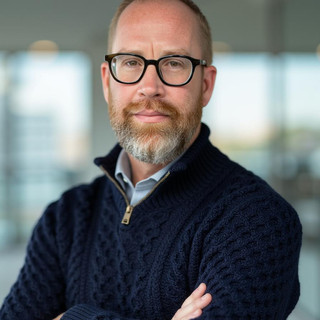
This year’s Summit held particular meaning for me, as I had the opportunity to engage in three distinct roles: moderator, main-stage panelist, and advisory board member. Each role offered a different vantage point into the same central question—how do we design systems that actually work for the people they are intended to serve?
Moderating Conversations That Matter
I had the privilege of moderating two sessions that, while different in focus, shared a common thread: the importance of perspective in shaping outcomes.
The first session, Recovery Ready Families: The Untapped Power in the Room, centered on a truth that is often acknowledged but under-leveraged—families are foundational to both the risk of substance use disorder and the ability to recover from it. What stood out most was the framing of families not just as participants in the recovery process, but as holders and builders of recovery capital. When supported appropriately, families can serve as stabilizing forces that extend far beyond the individual. Equally important was the recognition that families themselves are navigating complex systems—healthcare, education, justice, and community structures—that often operate in silos. If we are serious about improving outcomes, we must design systems that acknowledge and integrate the role of families, rather than treating them as an afterthought.
The second session, Your Journey, Their Path: Avoiding Personal Bias in Client Recovery, challenged us to look inward. Professionals with lived experience bring immense value to this work—but they also carry perspectives shaped by their own recovery journeys. The discussion around Medications for Opioid Use Disorder (MOUD) was particularly powerful, highlighting how even well-intentioned beliefs can create barriers to evidence-based care when projected onto clients. The takeaway here is not to diminish lived experience—but to elevate self-awareness as a core competency in behavioral health practice. The best systems are not only evidence-based; they are also reflective and adaptive.
Taking the Main Stage: AI and the Future of the Response
During the conference, I was also honored to serve as a panelist during a main-stage plenary session, AI & the Overdose Crisis: Innovation at the Front Lines. Artificial intelligence is rapidly moving from concept to application in behavioral health. The conversation focused on how AI can support prevention, expand access to care, strengthen public safety strategies, and improve decision-making through better use of data. Also, how can organizations leverage practical solutions involving AI that are cognizant of state, federal, and clinical licensure policies.
My contribution to the discussion drew from recent work moderating sessions at the Behavioral Health AI Summit, as well as my broader experience at the intersection of data, payer systems, and clinical care. I emphasized two key ideas. First, the integration of AI into higher education and workforce development is no longer optional. If we want a workforce that is prepared for the future, we must equip clinicians, administrators, and leaders with the tools and literacy needed to engage with these technologies effectively. Second, I introduced the idea that we are entering an increasingly “existential” relationship with AI. This is not simply about adopting new tools—it is about redefining how decisions are made, how care is delivered, and how systems learn and evolve. That reality demands a thoughtful, ethical, and pragmatic approach to implementation.
Serving Behind the Scenes: The Advisory Board Perspective
In my role as a member of the Summit’s Advisory Board, I have the unique opportunity to contribute to shaping both the content and the attendee experience. One of the most valuable aspects of this role is the ability to listen—really listen—to how attendees are experiencing the conference. What resonates? What feels missing? Where are we pushing the conversation forward, and where are we reinforcing the status quo? That feedback loop is critical. Conferences like this are not just about sharing information—they are about curating momentum. I look forward to bringing insights from this year’s Summit back to the advisory board as we continue to evolve the experience in meaningful ways.
Questions I’m Continuing to Think About
As I reflect on this year’s Summit, a few questions continue to stay with me:
How do we more intentionally design systems that center families as part of the solution, rather than peripheral to it?
What structures do we need to put in place to ensure that lived experience enhances care without introducing unintended bias?
How do we prepare today’s workforce—and tomorrow’s—for a reality in which AI is embedded in nearly every aspect of care delivery and decision-making?
Where are the opportunities to better connect the work happening across disciplines, rather than allowing it to remain fragmented?
How NorthStar Behavioral Health Advisory Can Help
At NorthStar Behavioral Health Advisory, this is the work we focus on every day.
We partner with organizations to navigate complex behavioral health and social systems—bringing together clinical insight, payer strategy, and data-driven decision-making to design solutions that improve access, quality, and sustainability. Whether it’s building payer partnerships, advancing value-based care models, integrating technology into service delivery, or strengthening workforce strategy, our goal is simple: to help systems work better for the people they serve.
A Final Thought
As with previous years, what continues to inspire me most is the collective commitment across disciplines. From community engagement and prevention to treatment, harm reduction, justice-involved solutions, technology innovation, advocacy, policy, and peer support—the breadth of work happening across the country is remarkable. These efforts are not isolated; they are interconnected pieces of a much larger system that we are all working to improve. And while the challenges remain significant, so too does the sense of shared purpose.
If there is one thing I am reminded of each year at the Rx Summit, it is this: progress does not come from any single solution, organization, or discipline. It comes from the willingness to listen, to challenge assumptions, and to work together toward something better.


Comments